
Printed Quartz vs Traditional Quartz (2026): What’s the Difference and Which One Is Better for Modern Kitchens?
- Hits: 1209
Over the last few years, quartz countertops have evolved dramatically.
What was once a relatively straightforward category has now become one of the most design-driven segments in the entire surface industry. Homeowners are no longer choosing quartz simply because it is durable. They are choosing it because they want surfaces that feel more architectural, more refined, and more connected to the way modern interiors are evolving.
And one of the biggest conversations happening in 2026 is the rise of Printed Quartz.
Designers, builders, and homeowners across the United States are increasingly comparing:
The truth is: this is not really about one material being “good” and the other being “bad.”
It is about understanding:
What was once a relatively straightforward category has now become one of the most design-driven segments in the entire surface industry. Homeowners are no longer choosing quartz simply because it is durable. They are choosing it because they want surfaces that feel more architectural, more refined, and more connected to the way modern interiors are evolving.
And one of the biggest conversations happening in 2026 is the rise of Printed Quartz.
Designers, builders, and homeowners across the United States are increasingly comparing:
- Printed Quartz
- Traditional Quartz
The truth is: this is not really about one material being “good” and the other being “bad.”
It is about understanding:
- design priorities
- visual expectations
- slab consistency
- realism
- architectural application
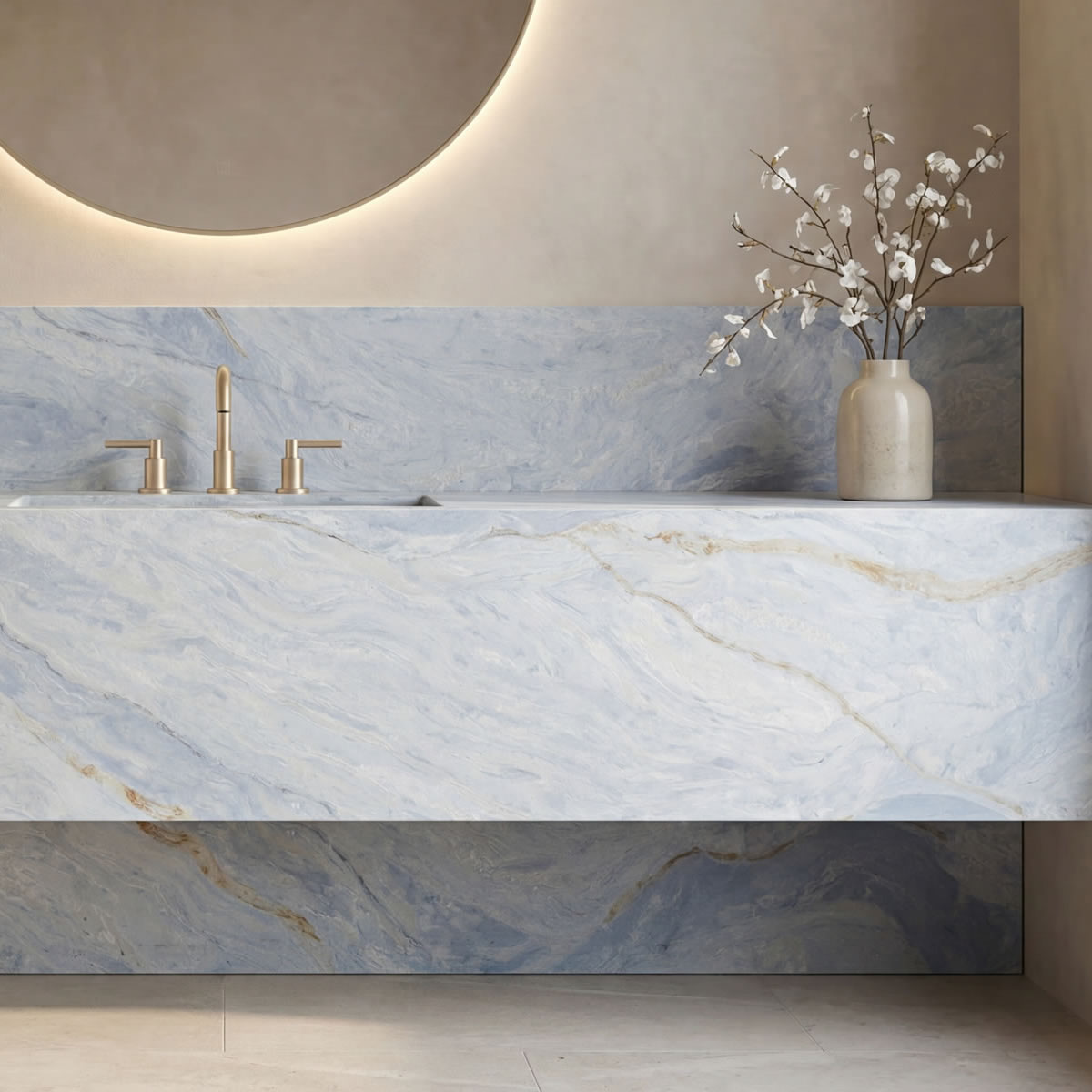
Quick Answer: What’s the Difference?
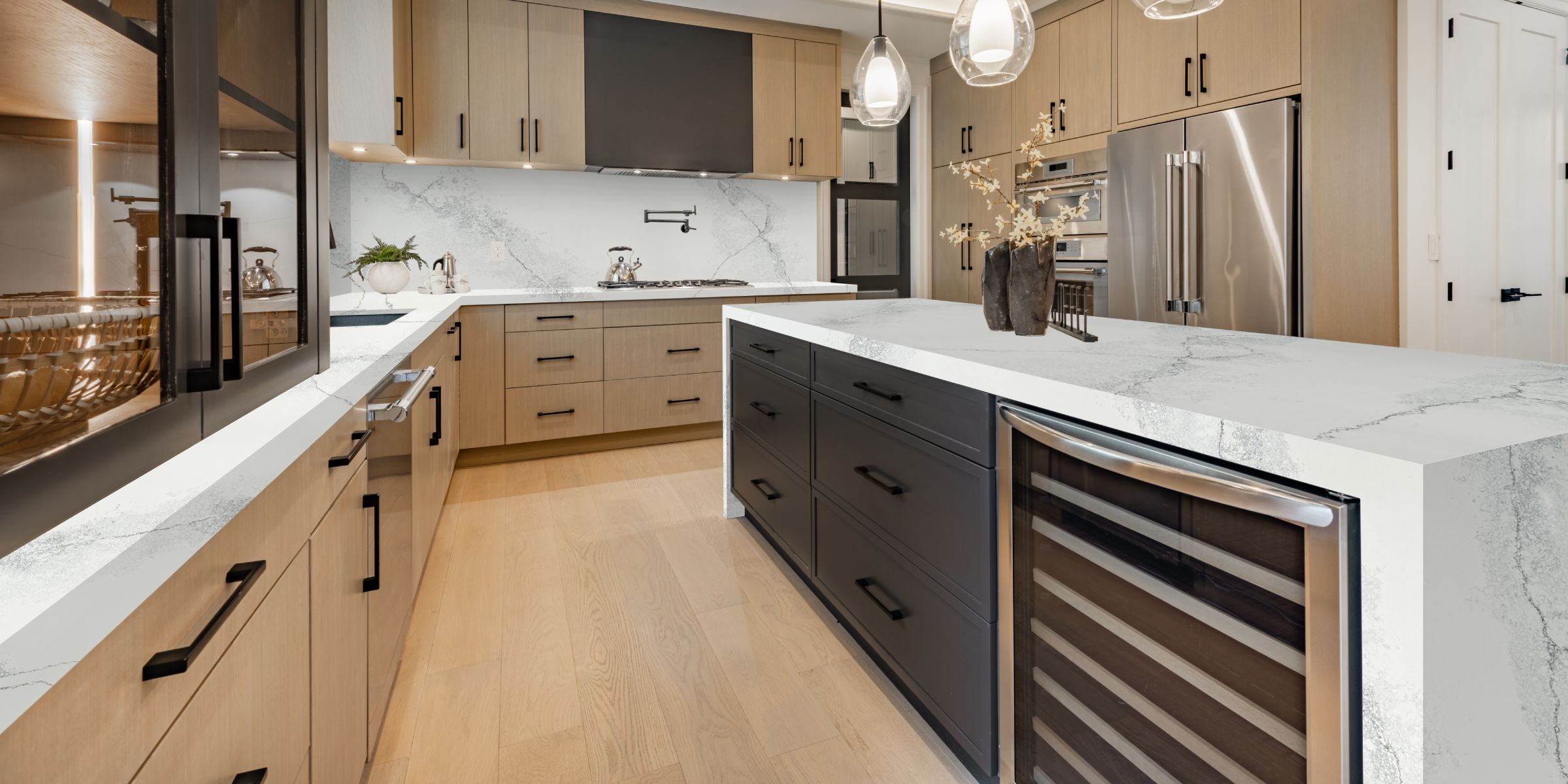
Traditional Quartz
Patterns are created by mixing pigments, minerals, and aggregates throughout the slab during manufacturing.
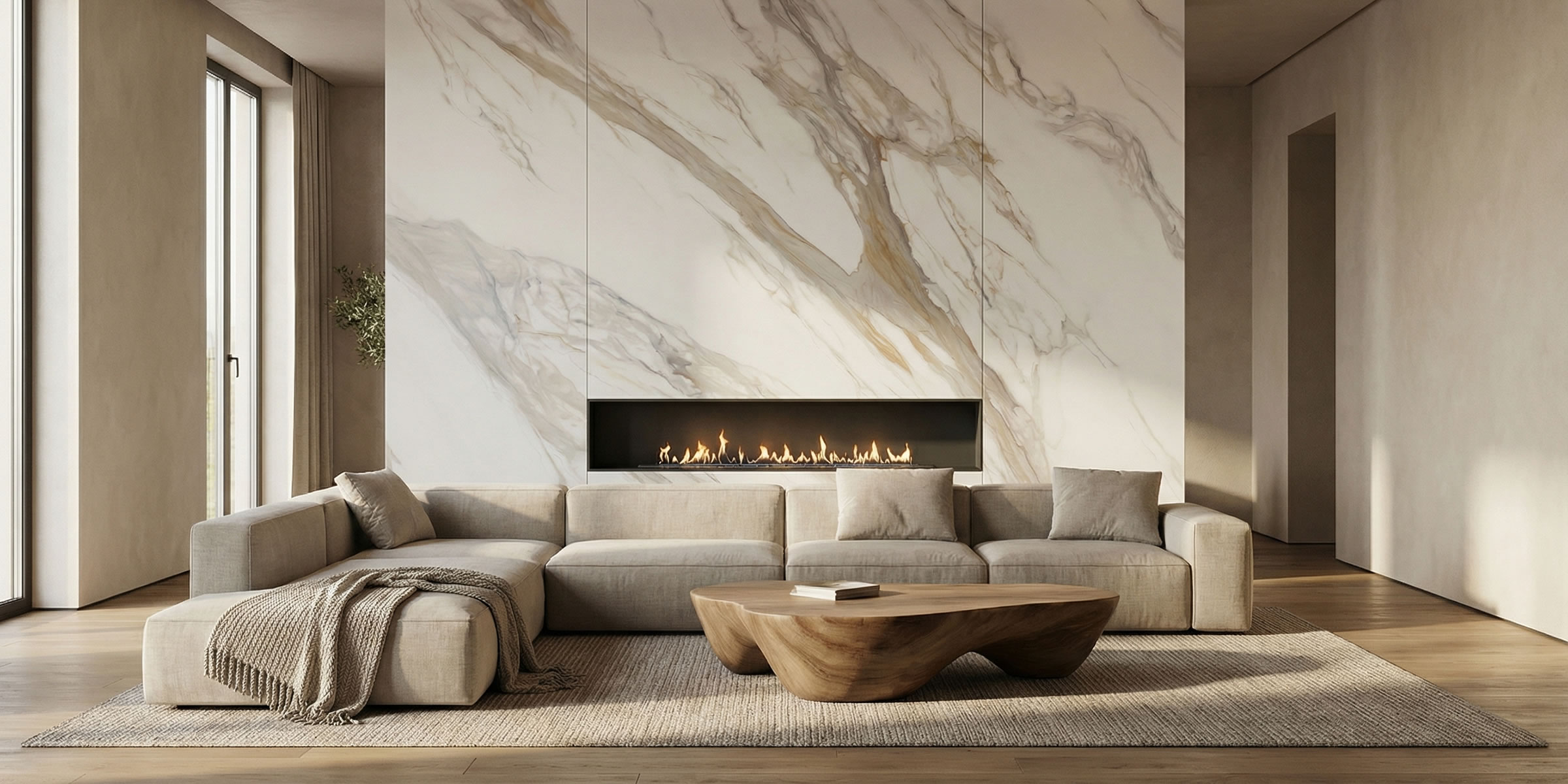
Printed Quartz
Uses advanced digital printing technology to create more controlled and realistic surface visuals.
Why This Comparison Matters in 2026
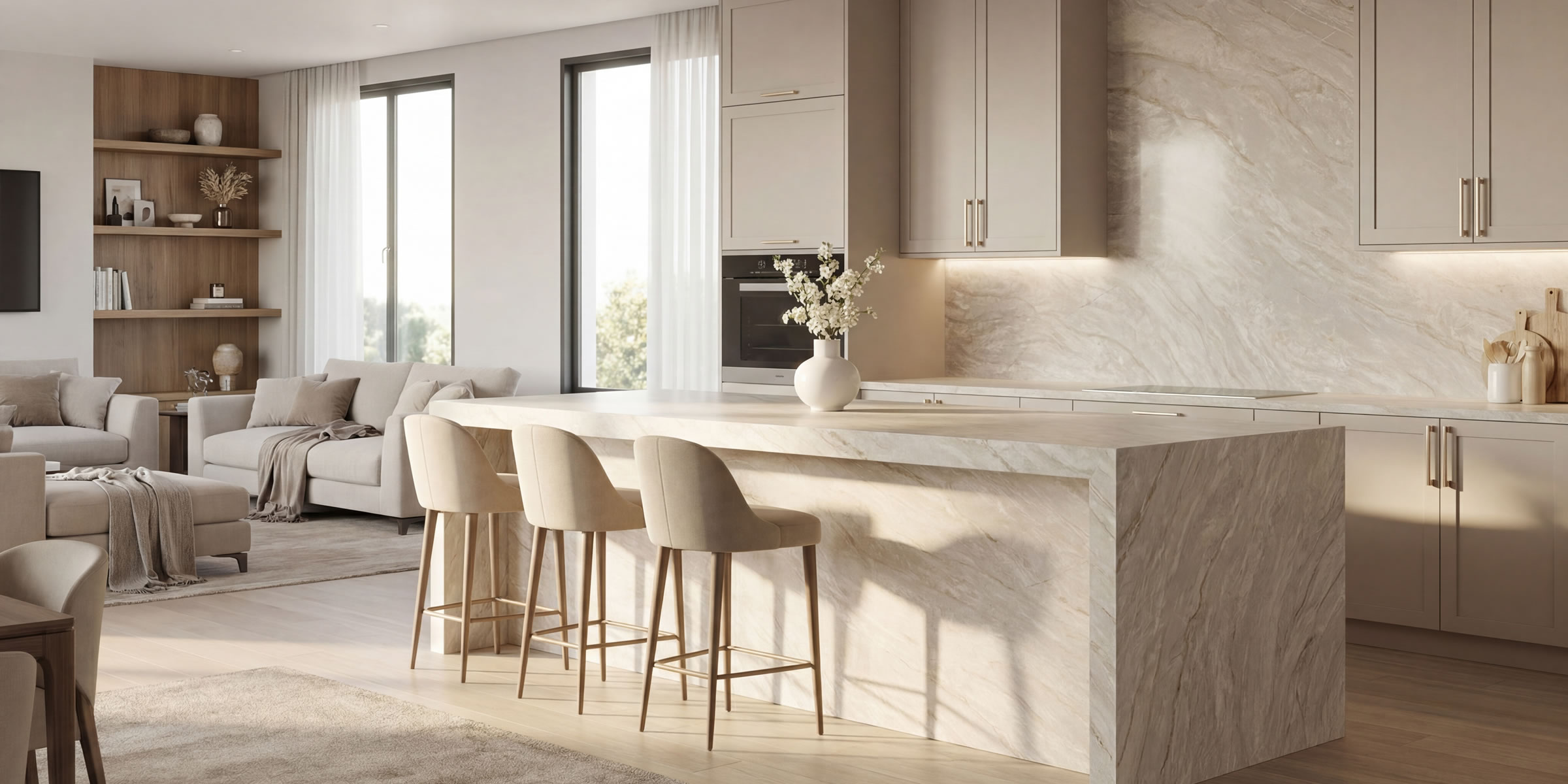
A decade ago, most quartz countertops focused heavily on practicality:
Today, homeowners also expect:
It solves visual limitations that traditional quartz sometimes struggles with.
- durability
- stain resistance
- low maintenance
Today, homeowners also expect:
- realistic veining
- natural-looking movement
- luxury aesthetics
- larger visual flow
- cleaner slab transitions
It solves visual limitations that traditional quartz sometimes struggles with.
What Is Traditional Quartz?
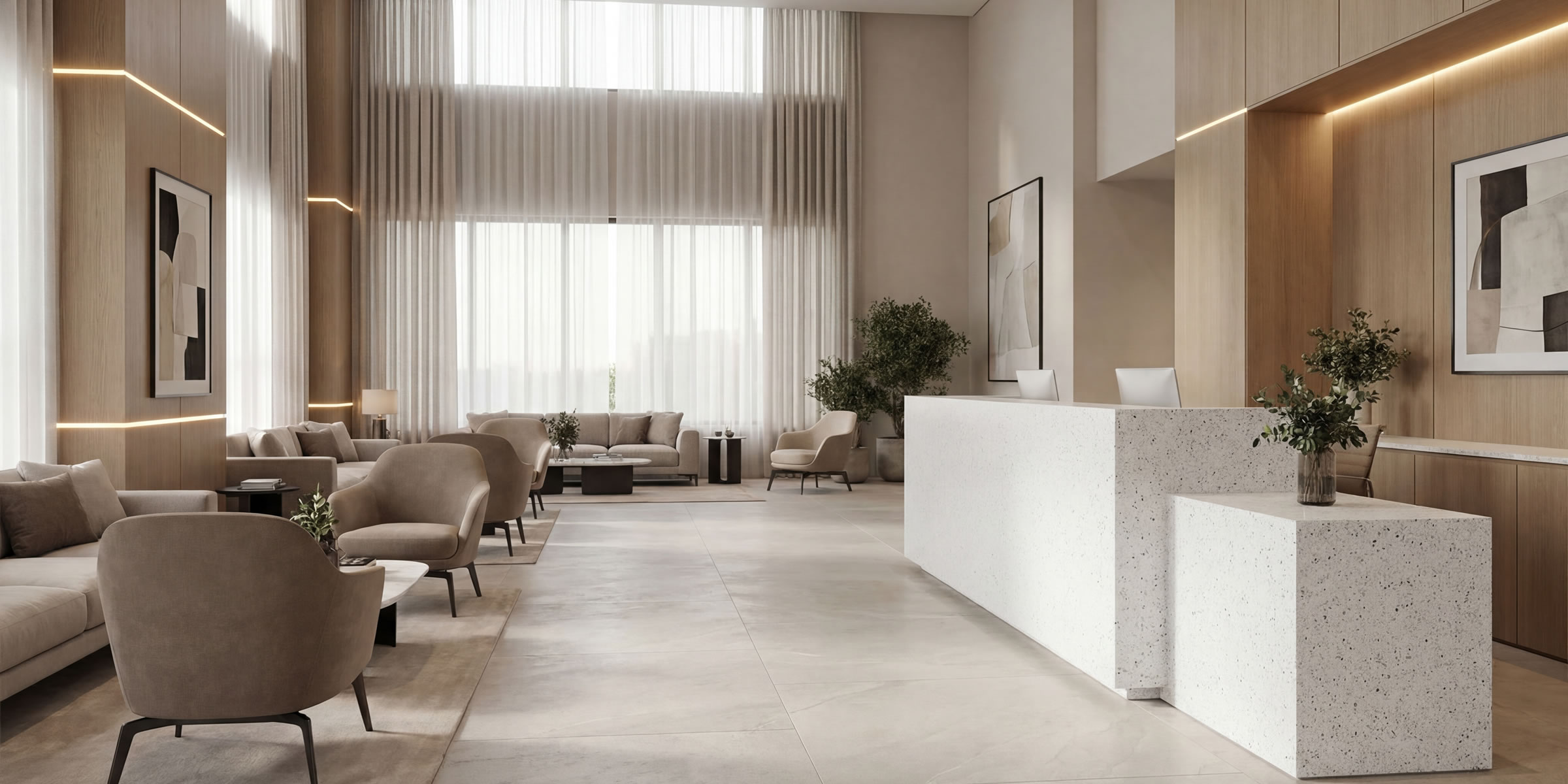
Traditional quartz is an engineered stone surface made from:
For many years, this manufacturing method dominated the quartz industry.
And for good reason:
traditional quartz remains one of the most durable and practical countertop materials available.
- natural quartz minerals
- resins
- pigments
For many years, this manufacturing method dominated the quartz industry.
And for good reason:
traditional quartz remains one of the most durable and practical countertop materials available.
Advantages of Traditional Quartz
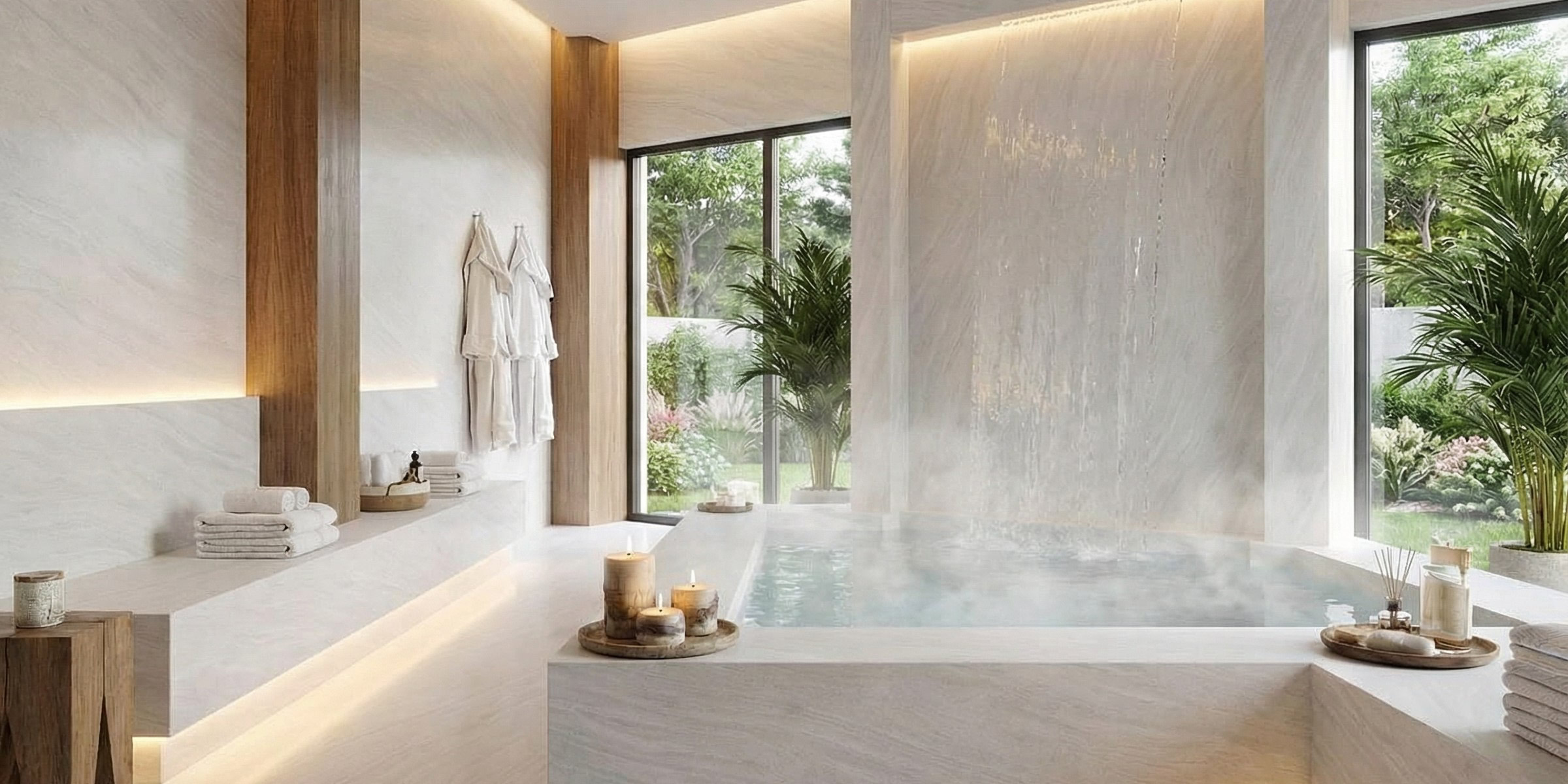
Traditional quartz continues to perform extremely well in:
- residential kitchens
- bathrooms
- commercial spaces
- multi-unit projects
- highly durable
- non-porous
- stain resistant
- easy maintenance
- consistent availability
- broad color selection
- more predictable pricing
- faster production scalability
- simpler fabrication for many projects
The Main Limitation of Traditional Quartz
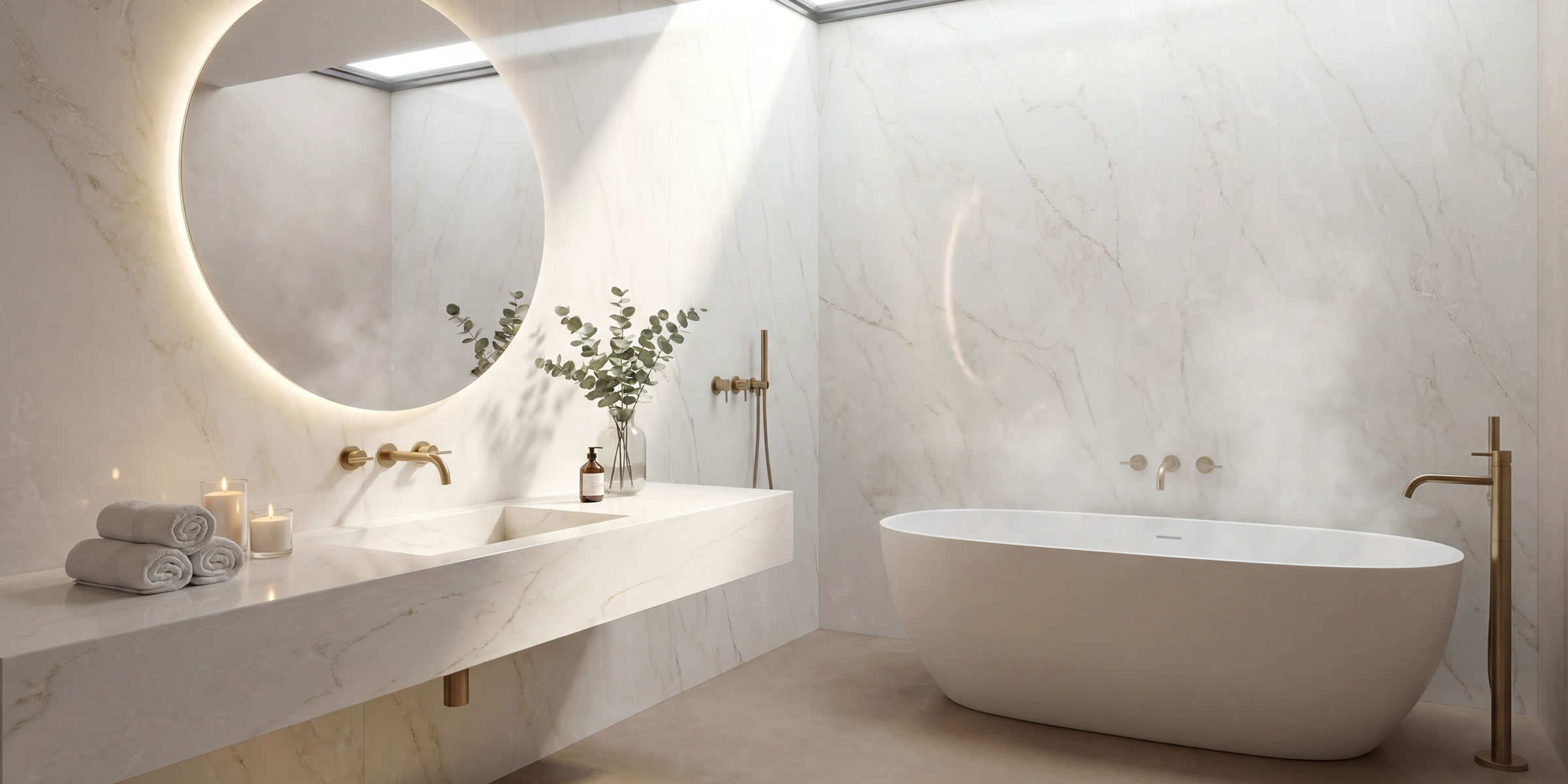
The biggest challenge with traditional quartz has always been realism.
Because patterns are created internally through material blending, some slabs can appear:
Because patterns are created internally through material blending, some slabs can appear:
- repetitive
- overly uniform
- visually flat
- less natural from close distances
- large waterfall islands
- open-concept kitchens
- integrated stone applications
- luxury slab backsplashes
- more movement
- more depth
- more natural variation
- better visual flow
What Is Printed Quartz?
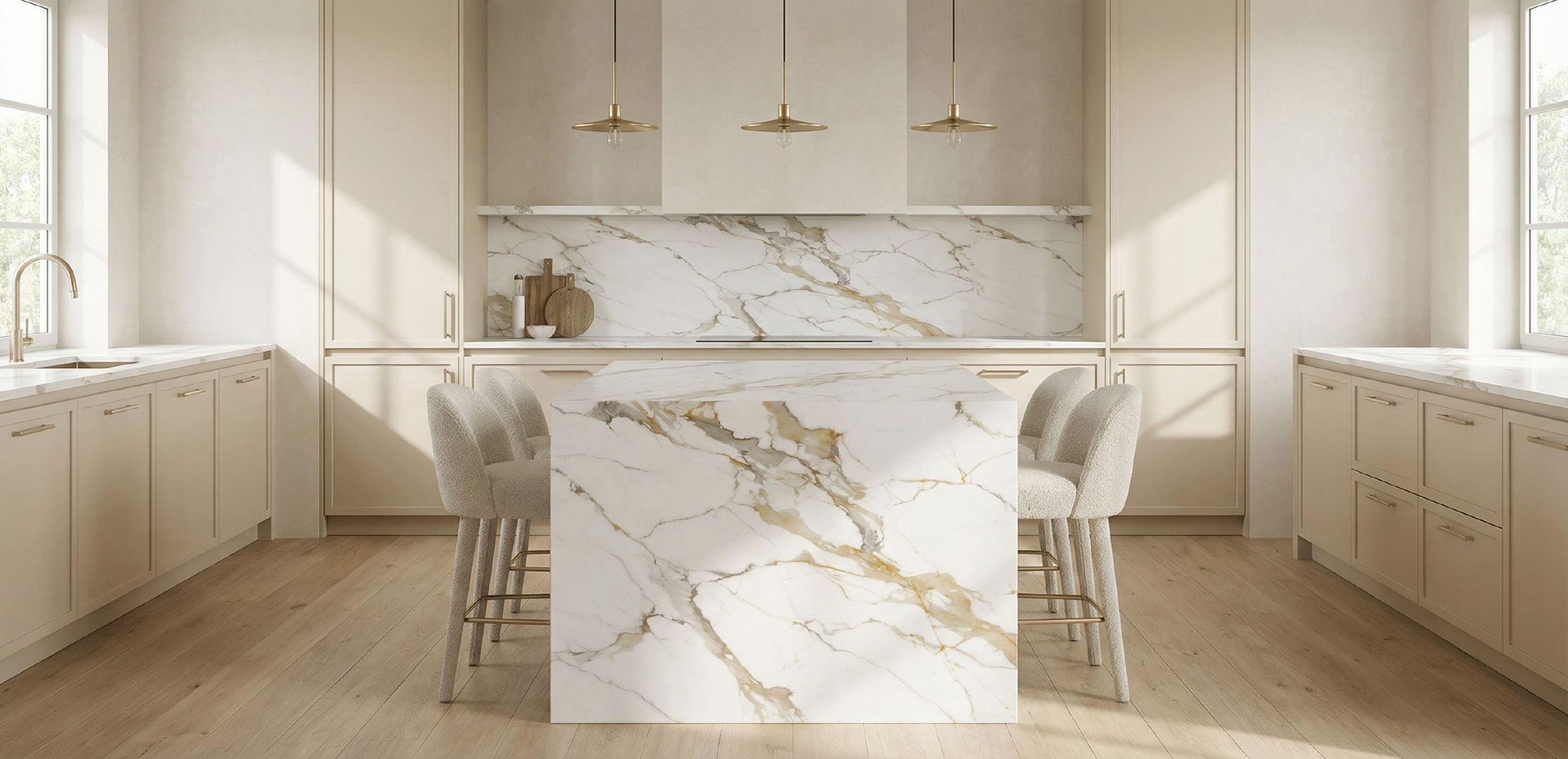
Printed Quartz is an engineered quartz surface enhanced with high-definition digital printing technology.
Instead of relying only on internal material blending, manufacturers apply highly detailed visuals directly onto the slab surface using advanced printing systems.
This allows significantly greater control over:
Instead of relying only on internal material blending, manufacturers apply highly detailed visuals directly onto the slab surface using advanced printing systems.
This allows significantly greater control over:
- veining
- movement
- scale
- depth
- composition
- more architectural
- more realistic
- less repetitive
- visually closer to natural stone
Why Designers Are Choosing Printed Quartz
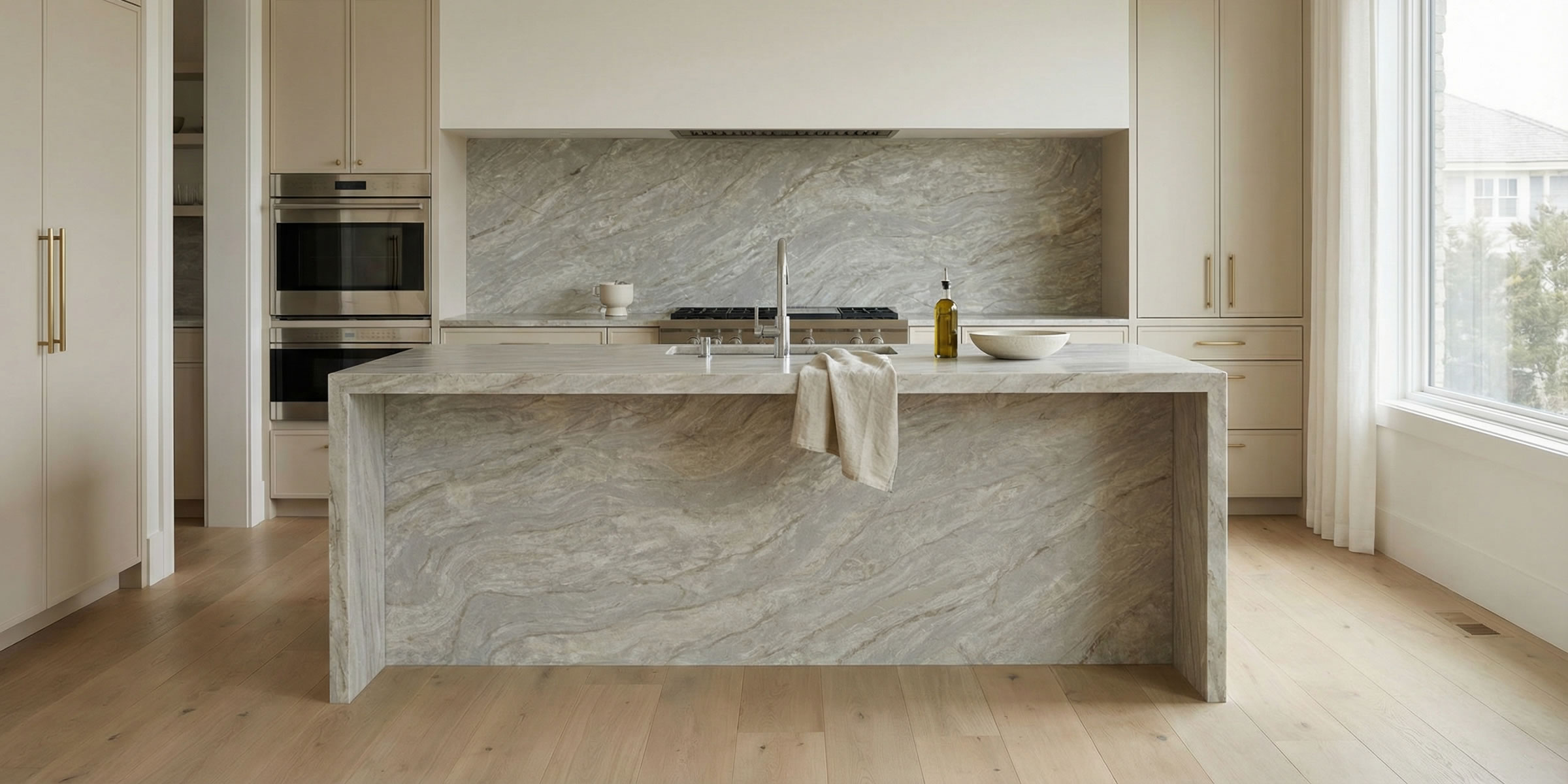
One of the biggest shifts happening in luxury interiors right now is the move toward controlled realism.
Designers still love the elegance of natural marble and quartzite — but many projects require:
It combines:
Designers still love the elegance of natural marble and quartzite — but many projects require:
- more consistency
- easier maintenance
- predictable slab appearance
- scalable installation
It combines:
- engineered durability
- more refined aesthetics
- luxury kitchens
- waterfall islands
- full-height slab backsplashes
- modern commercial interiors
Veining and Visual Movement
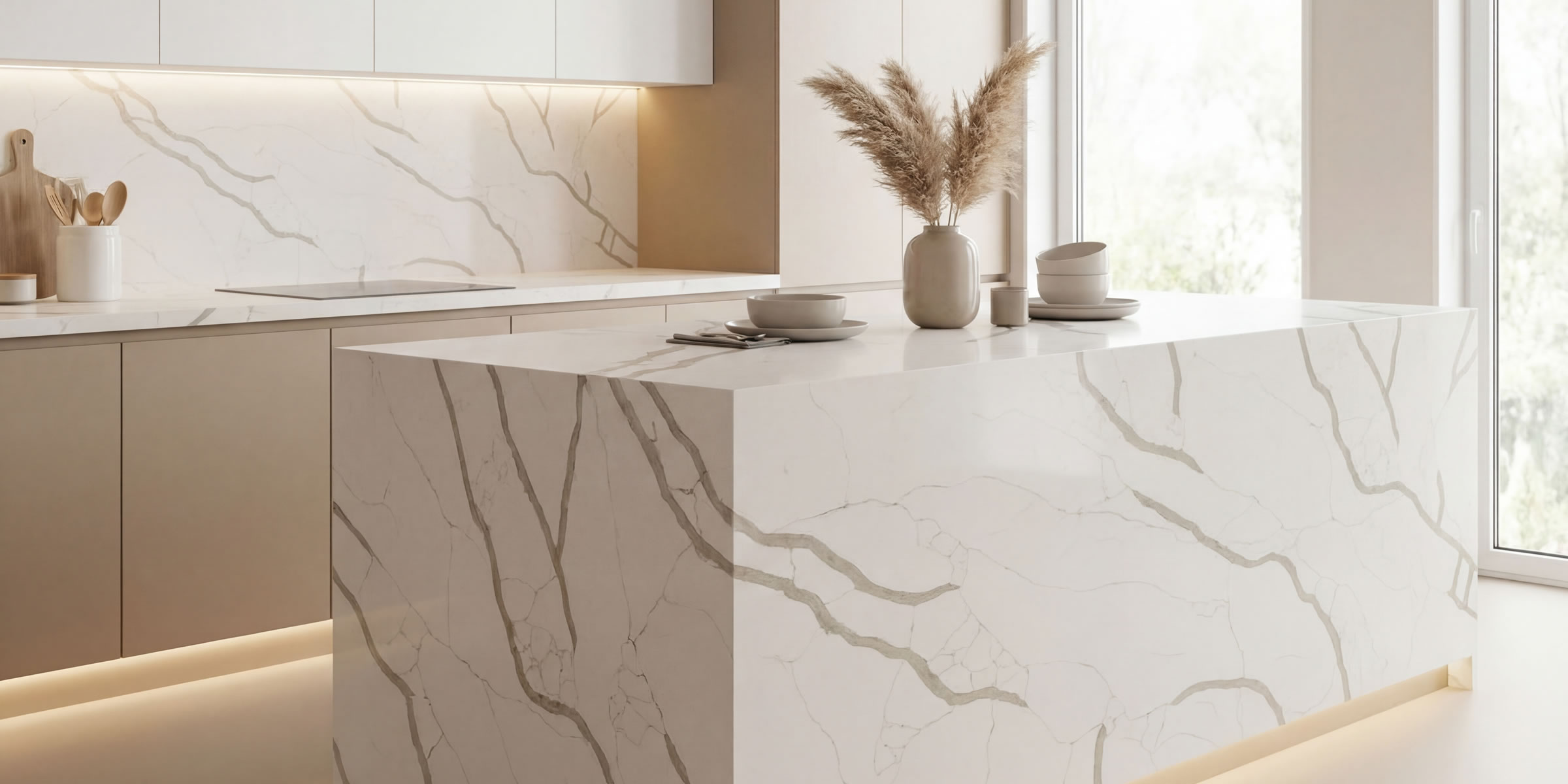
This is where the difference between Printed Quartz and Traditional Quartz becomes most obvious.
Traditional Quartz Veining
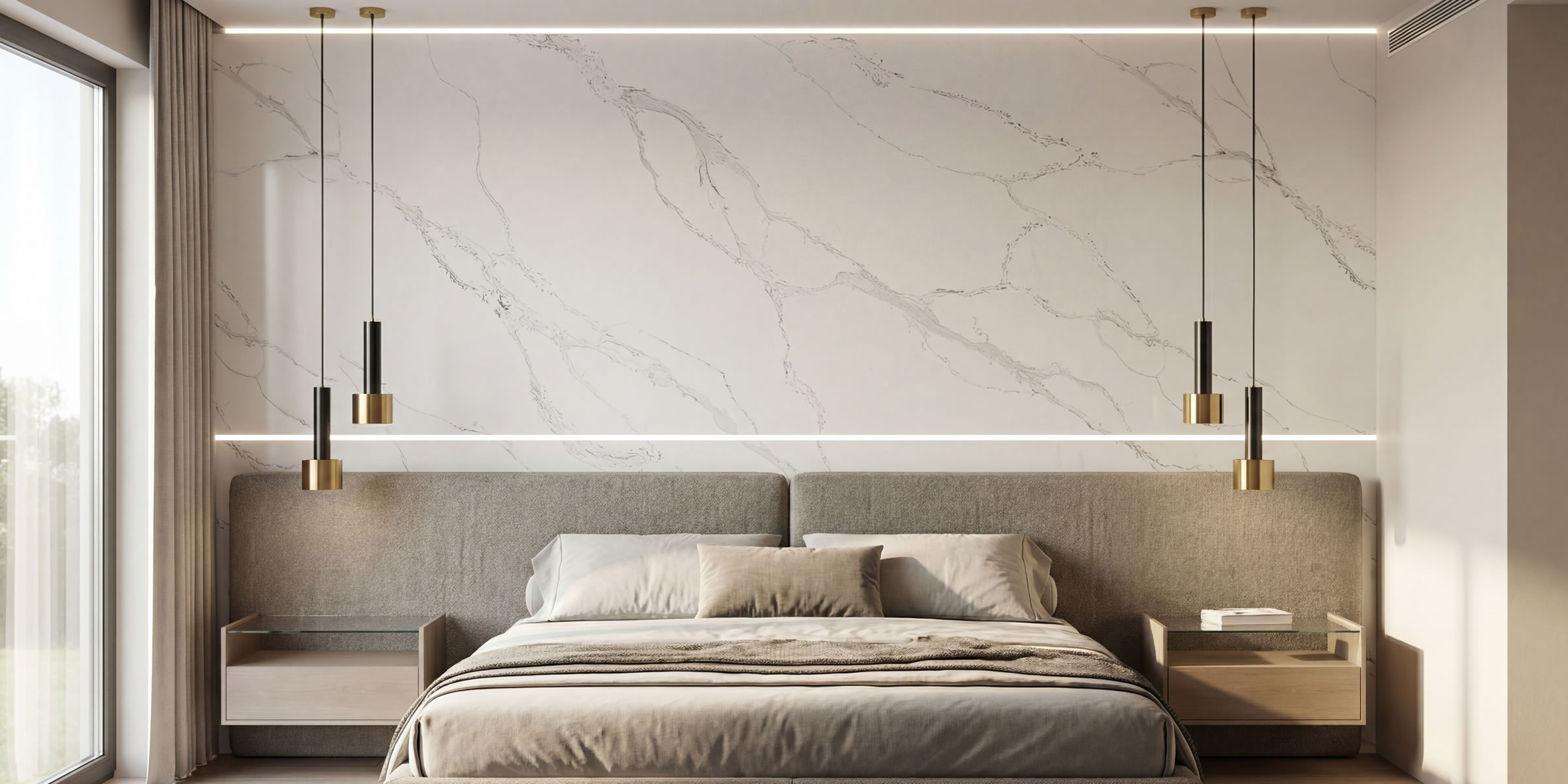
Traditional quartz patterns are often:
It works especially well in:
- more controlled
- more repetitive
- smaller in movement
- more uniform across the slab
It works especially well in:
- minimalist interiors
- simple modern kitchens
- budget-conscious projects
Printed Quartz Veining
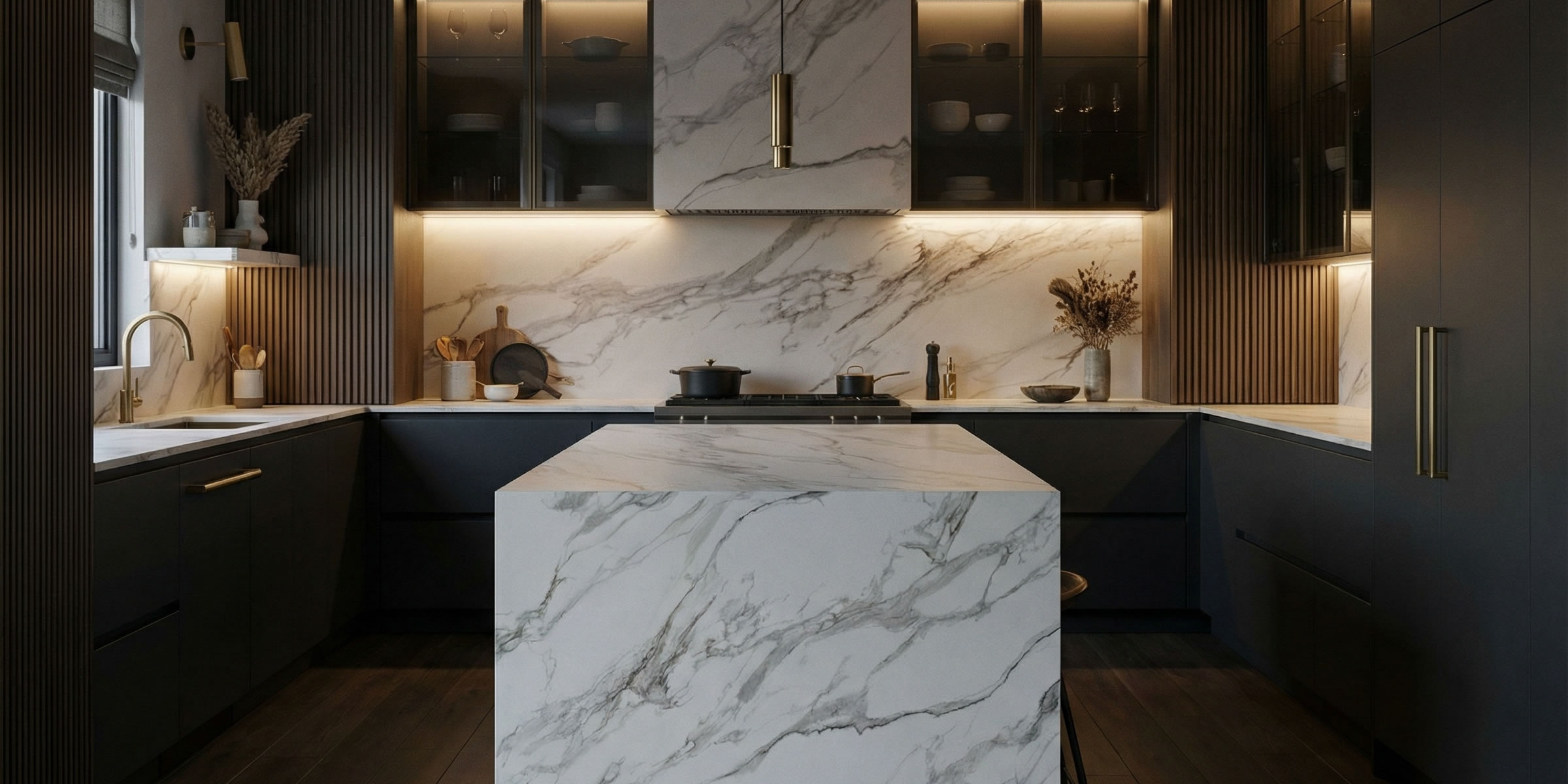
Printed Quartz allows:
Especially in modern luxury kitchens where the island becomes the centerpiece of the room.
- larger flowing veins
- softer transitions
- more dramatic depth
- more natural stone-inspired movement
Especially in modern luxury kitchens where the island becomes the centerpiece of the room.
Which One Looks More Natural?
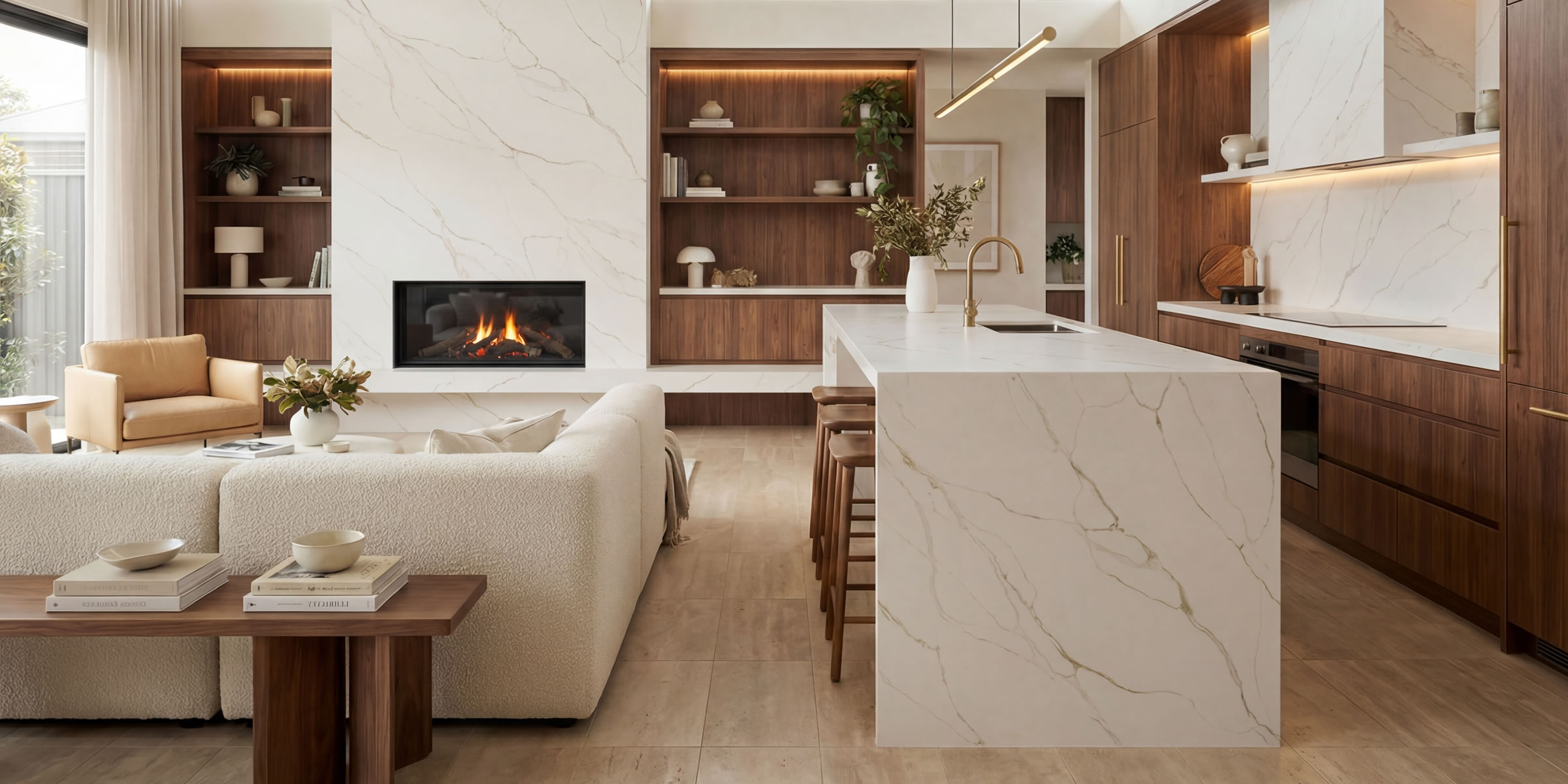
In most cases:
Printed Quartz.
Modern digital printing technology has improved dramatically over the last few years.
Many newer Printed Quartz surfaces now create:
Printed Quartz.
Modern digital printing technology has improved dramatically over the last few years.
Many newer Printed Quartz surfaces now create:
- softer layering
- more organic movement
- realistic vein fading
- better visual depth
Durability: Are They Different?
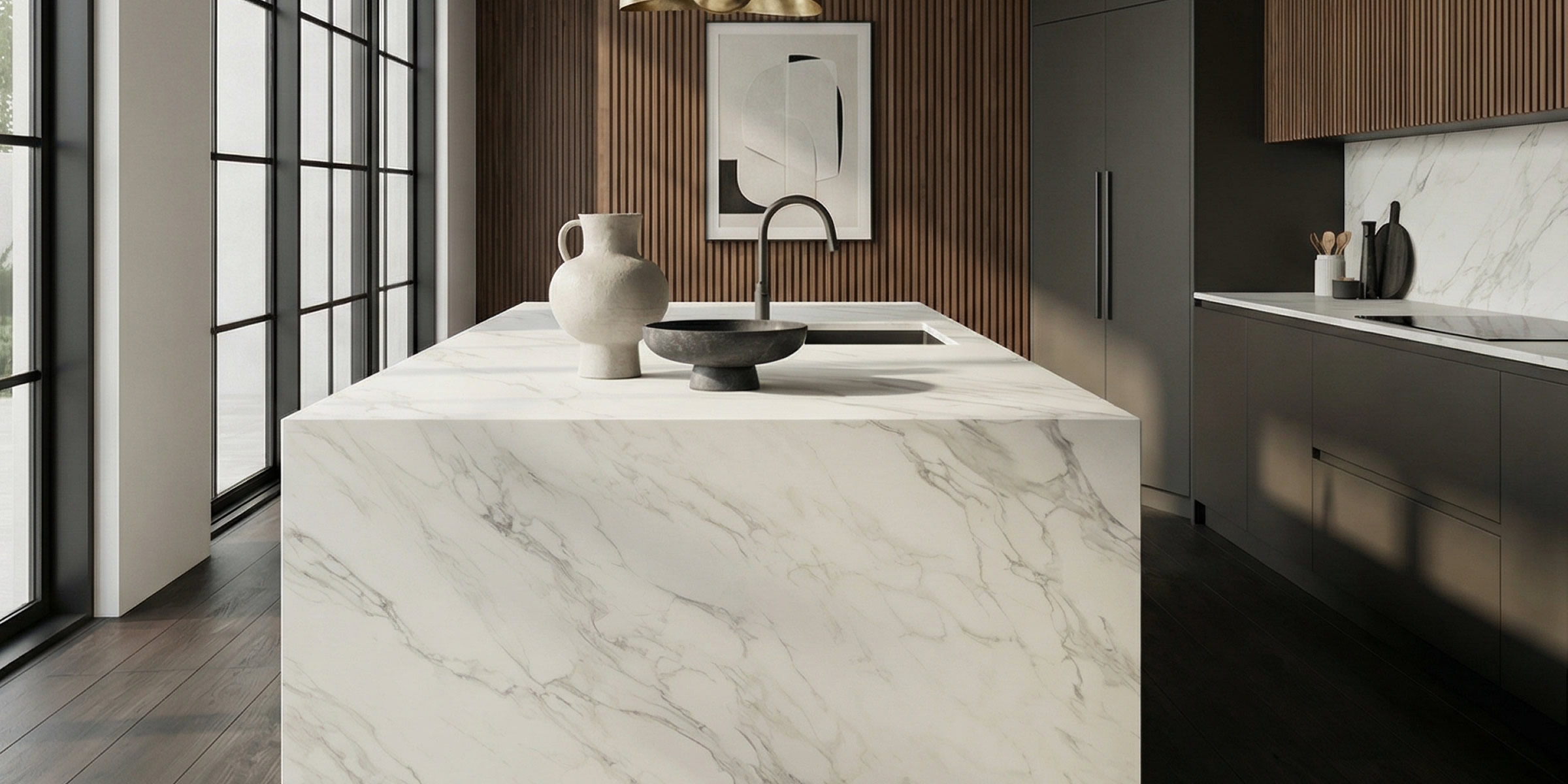
This is one of the biggest misconceptions.
Both Printed Quartz and Traditional Quartz are still quartz surfaces.
That means both typically offer:
The biggest distinction is visual rather than structural.
Both Printed Quartz and Traditional Quartz are still quartz surfaces.
That means both typically offer:
- stain resistance
- non-porous performance
- low maintenance
- everyday durability
The biggest distinction is visual rather than structural.
Maintenance Comparison
Both materials are considered low-maintenance surfaces.
Neither typically requires:
Neither typically requires:
- sealing
- intensive upkeep
- complicated care routines
Why Printed Quartz Became More Popular in 2026
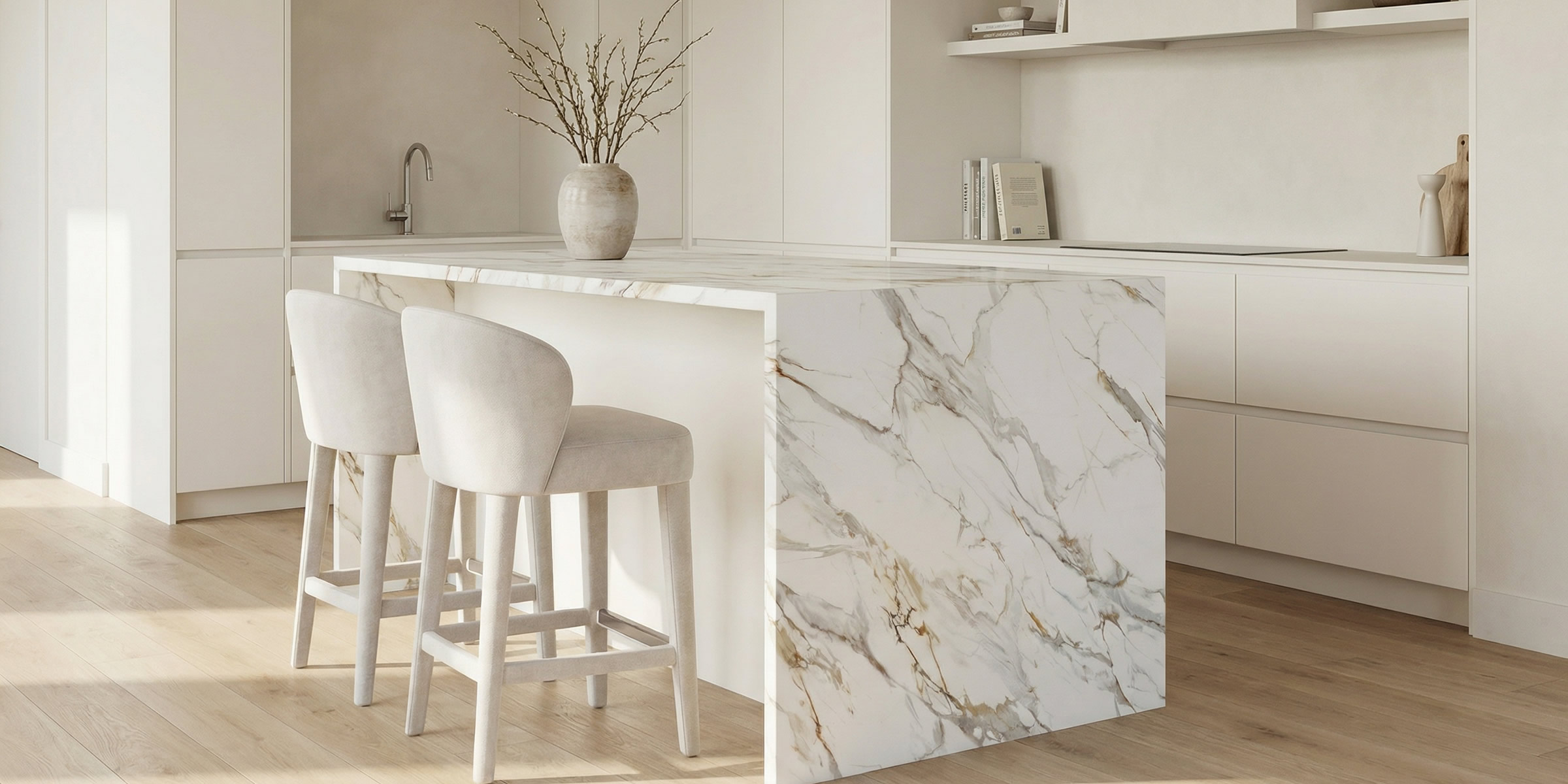
Several major design trends accelerated the growth of Printed Quartz:
1. Waterfall Islands
Large waterfall islands demand:- cleaner vein flow
- visual continuity
- larger movement patterns
2. Jumbo Slabs
Larger slabs increased demand for:- better visual scaling
- more natural composition
- less repetitive surfaces
3. Quiet Luxury Interiors
Modern luxury design is becoming:- softer
- warmer
- more architectural
- less visually aggressive
4. Marble Aesthetics Without Marble Maintenance
Many homeowners still want marble-inspired interiors — just without:- etching
- staining
- sealing
- maintenance anxiety
Cost: Which Is More Expensive?
Generally:
Printed Quartz tends to cost more.
The reasons include:
Especially in high-end kitchens.
Printed Quartz tends to cost more.
The reasons include:
- advanced manufacturing technology
- more complex production
- premium positioning
- higher design demand
Especially in high-end kitchens.
Which One Is Better for Modern Luxury Kitchens?
There is no universal answer. It depends on the design direction.
Traditional Quartz Is Better If:
You want:- cleaner minimalism
- simpler patterns
- more budget flexibility
- highly practical surfaces
Printed Quartz Is Better If:
You want:- dramatic movement
- marble-inspired aesthetics
- architectural visual flow
- luxury statement surfaces
The Future of Quartz Is Becoming More Design-Driven
One of the biggest changes happening in the industry is that quartz is no longer viewed as simply a practical countertop material.
It is becoming part of the architecture of the home itself.
Designers are increasingly thinking about:
It is becoming part of the architecture of the home itself.
Designers are increasingly thinking about:
- slab continuity
- visual balance
- integrated surfaces
- spatial atmosphere
Why Venezia Surfaces Offers Both
At Venezia Surfaces, we believe both Printed Quartz and Traditional Quartz have an important place in modern interiors.
Different projects require different solutions.
That’s why our collections include:
Because great interiors are not only about trends — they are about balance, atmosphere, and long-term livability.
Different projects require different solutions.
That’s why our collections include:
- premium traditional quartz
- printed quartz designs
- jumbo slabs
- marble-look surfaces
- modern neutral palettes
- designers
- fabricators
- builders
- homeowners
Because great interiors are not only about trends — they are about balance, atmosphere, and long-term livability.
FAQ: Printed Quartz vs Traditional Quartz
Is Printed Quartz real quartz?
Yes. Printed Quartz is still an engineered quartz surface with added digital printing technology.Does Printed Quartz perform differently?
In most cases, durability and maintenance are very similar to traditional quartz.Which looks more realistic?
Printed Quartz typically creates more natural-looking veining and movement.Is Printed Quartz more expensive?
Usually yes, due to advanced production methods and premium positioning.Is traditional quartz outdated?
Not at all. Traditional quartz remains one of the most popular countertop materials in the U.S.Which is better for waterfall islands?
Printed Quartz often performs better visually because of larger flowing patterns and cleaner continuity.Final Thoughts
The conversation between Printed Quartz and Traditional Quartz is really about how modern interiors are evolving.
Traditional Quartz continues offering:
Both have a place.
And in 2026, the best projects are often the ones that understand how to use each material intentionally.
At Venezia Surfaces, we continue curating both categories carefully — because modern surface design is no longer about choosing trends blindly.
It’s about creating spaces that feel balanced, refined, and built to last.
Traditional Quartz continues offering:
- reliability
- durability
- simplicity
- practical elegance
- realism
- architectural design
- visual depth
- luxury aesthetics
Both have a place.
And in 2026, the best projects are often the ones that understand how to use each material intentionally.
At Venezia Surfaces, we continue curating both categories carefully — because modern surface design is no longer about choosing trends blindly.
It’s about creating spaces that feel balanced, refined, and built to last.